京野澪
- 京野澪
Born in Saitama Prefecture in 1994
2016 Graduated from the Department of Oil Painting, Department of Plastic Painting, Musashino Art University
group exhibition
2014 "EAT and ART Exhibition" Ginza Modern Art, Tokyo
2018 “I don’t know when it will end” Gallery Q, Tokyo
2018 "heatwarming2018" Gallery Q, Tokyo
Awards
Won the "25th Main Exhibition" Excellent Work·Newcomer Award
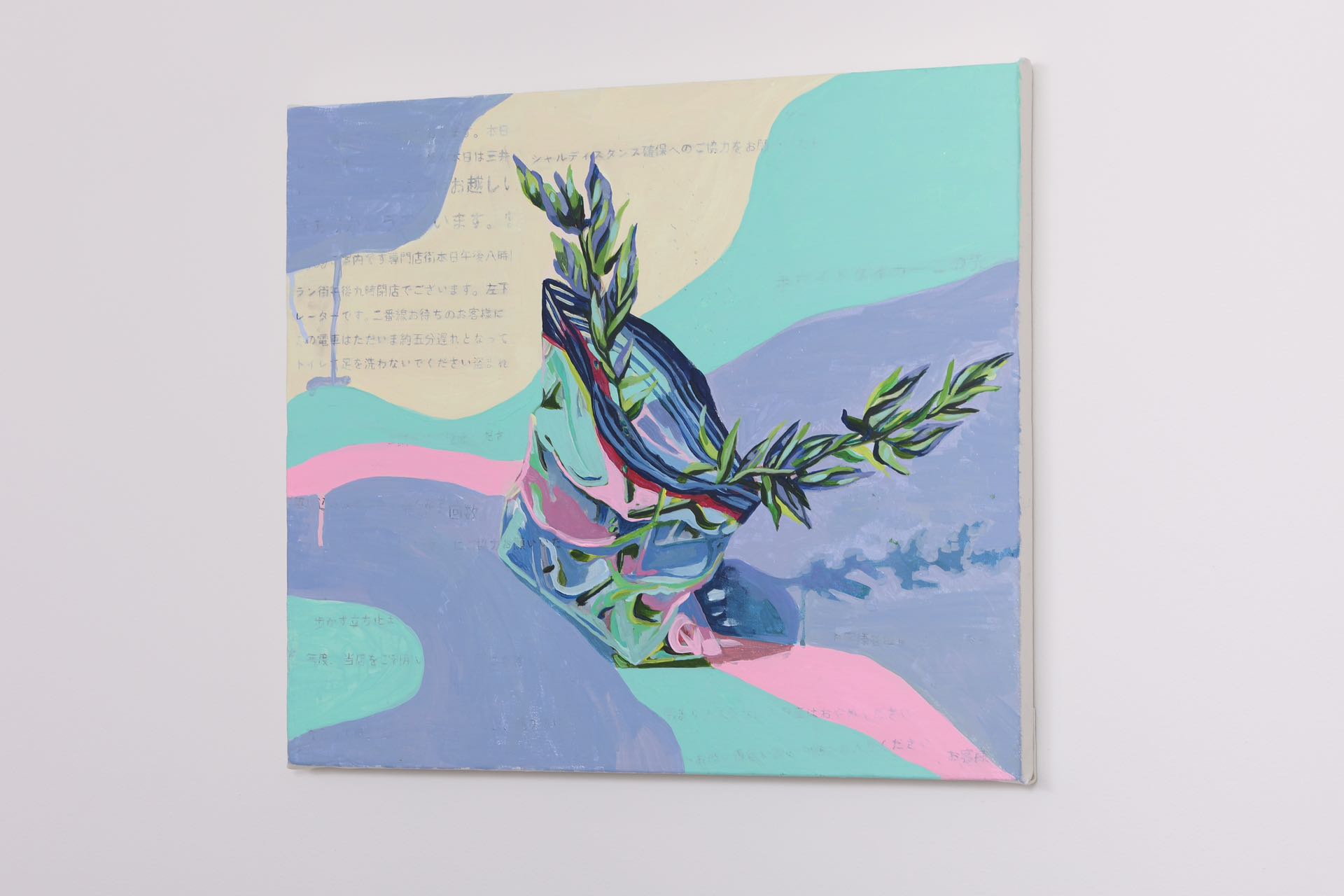
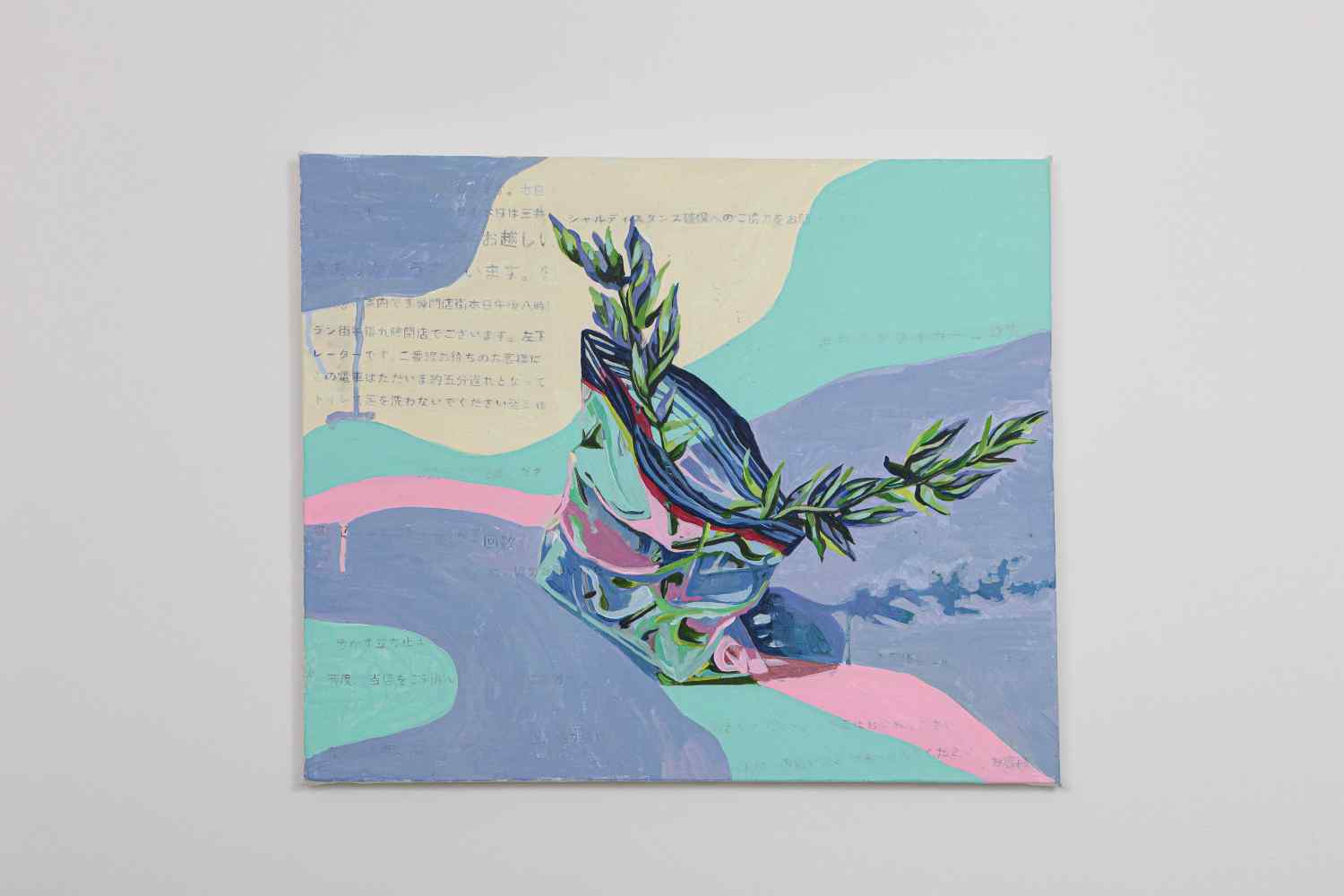
"Acrylic board" has entered our lives for several years. This transparent wall is a symbol of the changing forms of communication during the epidemic.
Conversations and dialogues that were going on naturally until then have a little bit of something foreign added to them that makes it feel unnatural.
Originally thought to be "natural" communication, small "incompleteness" often occurs even if it cannot be seen. Taking this as a starting point to re-understand, and using communication as the axis, I began to try to observe things that exist in the intermediate realm between people.
When we communicate through verbal and non-verbal factors, we strive to convey our thoughts and intentions to each other without misunderstanding. Sometimes I bite the bullet and try to convey it with gestures. Or guess the intent and try to draw the most.
But no matter how many words we use to express it, we can never fully share what each other means. There are deviations between languages or there are readings between the lines. As a result, there are often disagreements and misunderstandings in our communications.
Whatever the intention, whatever the appearance, what leaves "me" is sent to "you" to be distorted, broken down and interpreted in your mind. Although there is anxiety that cannot be conveyed, on the other hand, it is difficult to agree when asked whether he wants to "completely communicate".
We don't want complete communication. Because differences in understanding sometimes lead to unexpected encounters. In addition, the act of getting to know each other is also very interesting.
Sometimes, there are many scenes where the content of the conversation and the conveyance of meaning are not taken seriously.
There are also cases where it is important to have a conversation without other love, to share time and space with the other party if you are boring.
After playing with friends and returning home, I often can't remember what I was talking about, but the feelings I held at that time are kept in my mind as a resume. I think as long as that thing exists it's fine.
Because of the imperfect system, we sometimes pass each other, but even so, I enjoy the act of trial and error, sharing what and what with each other. Although the communication was full of disagreements and misunderstandings, I want to affirm the heartbeat that resides in this gap.
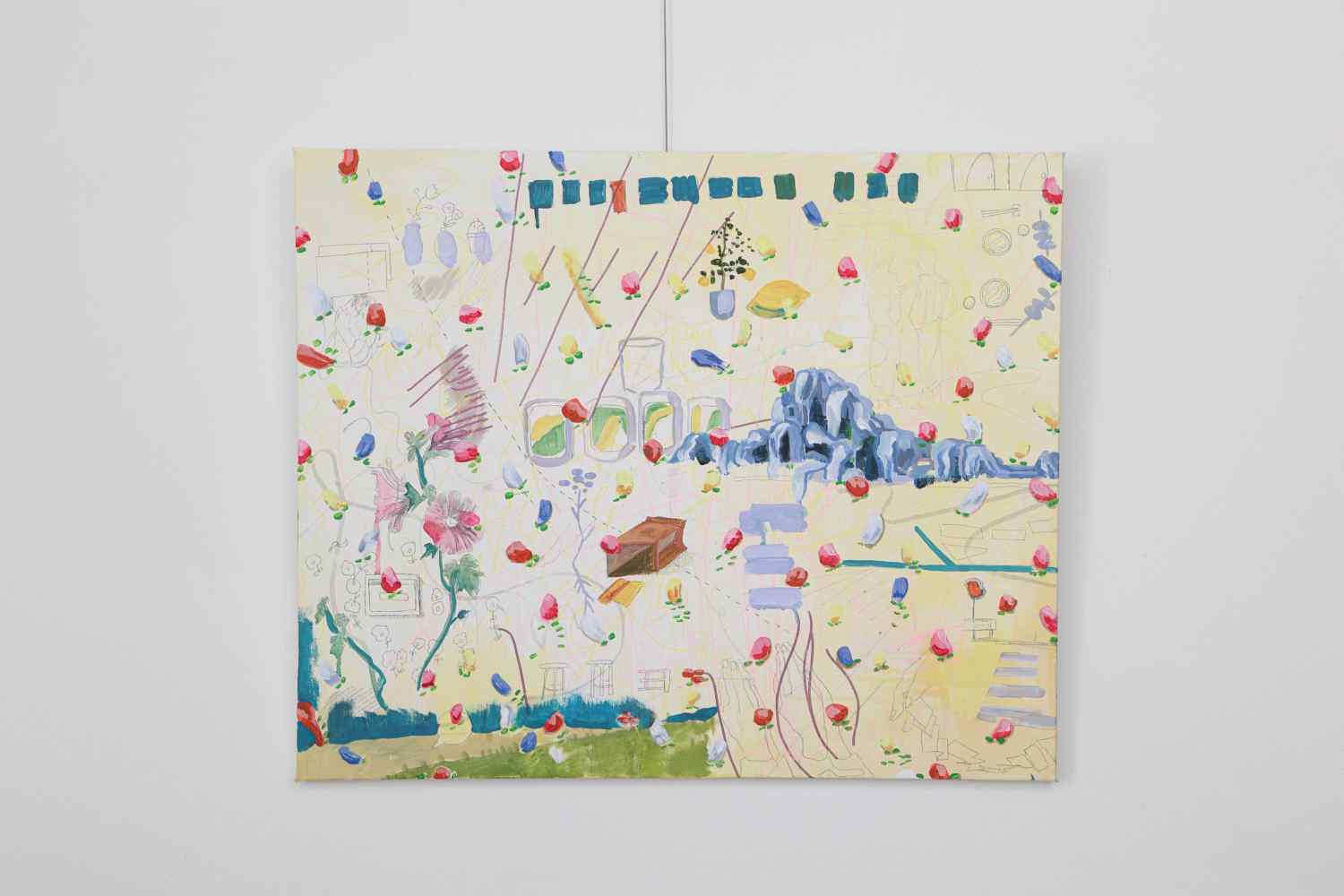
This work has "Integration of Conversation" assisted by 6 friends. I took the canvas with me and asked them one by one. My friend said "what" to me, asked the support body to draw random lines, and asked me to stop when he finished speaking. Lines are both drawn unconsciously and written consciously. Share the space with me while slowly drawing the line. The everyday act of conversation is considered a special act. And the session that was exchanged there is output with the work of "flare and divergence" that I brought back. The things “you” say are interpreted, broken down and reconstructed in the context of I and You. Six exchanges practiced over time in different places on a canvas, interlaced like fabric, the coils of which form the "I".
Everything then passes from me to the viewer in the form of a work. It can also be said to be a refracted communication that transcends time and space. I hope there will be disagreements and flashes between you and me too.